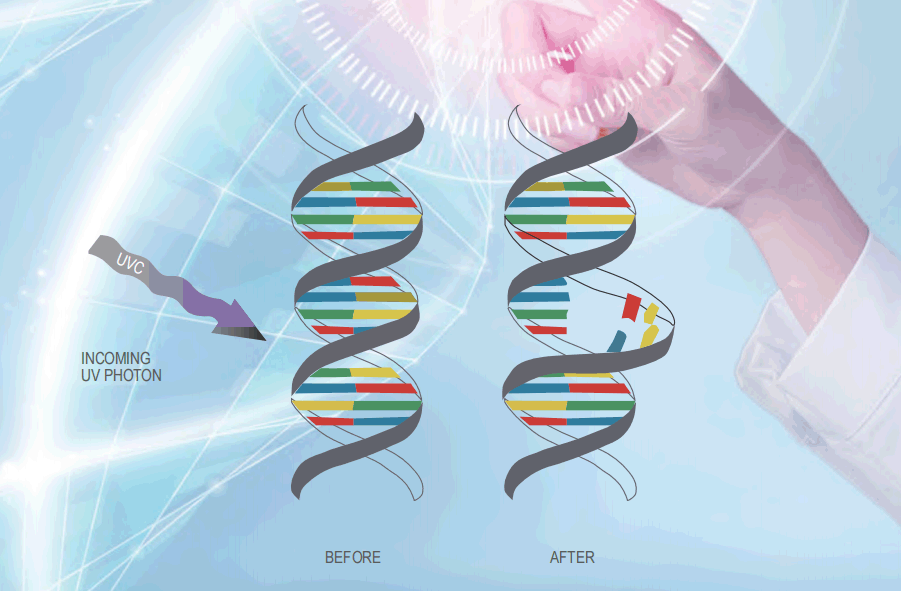
For static-water UV sterilization of water, UVC dose is calculated from the ultraviolet irradiance actually reaching the water and the exposure time. For a simplified case, UVC dose (mJ/cm²) = average irradiance (mW/cm²) × exposure time (s). A measured irradiance of 0.15 mW/cm² applied for 180 seconds therefore gives a nominal dose of 27 mJ/cm². That calculation is only the starting point. In a real water tank, engineers also need to consider water depth, UV transmittance, distance from the LED, module orientation, tank geometry, surface reflection, shadowed areas and whether the water mixes during treatment. WHO guidance likewise notes that UV-disinfection effectiveness depends on delivered fluence, which varies with intensity, exposure time and wavelength.
The basic relationship is:
UVC Dose (mJ/cm²) = Irradiance (mW/cm²) × Exposure Time (seconds)
NIST uses the same relationship when describing UV dose and exposure calculations: dose is the product of incident irradiance and exposure time. Suppose an engineer measures an average UVC irradiance of 0.20 mW/cm² at the relevant location in a static water chamber.
For a 60-second cycle:
0.20 × 60 = 12 mJ/cm²
For a 180-second cycle:
0.20 × 180 = 36 mJ/cm²
For a 300-second cycle:
0.20 × 300 = 60 mJ/cm²
This illustrates an important design principle: increasing exposure time increases delivered dose even when LED output remains unchanged. However, radiant power and irradiance are not interchangeable. Even when a high power uvc led source is used, radiant power describes the total optical output of the UV source, while irradiance describes the amount of UV power actually reaching a particular area, usually in mW/cm². A 10 mW UVC LED module does not automatically deliver 10 mW/cm² to the water.
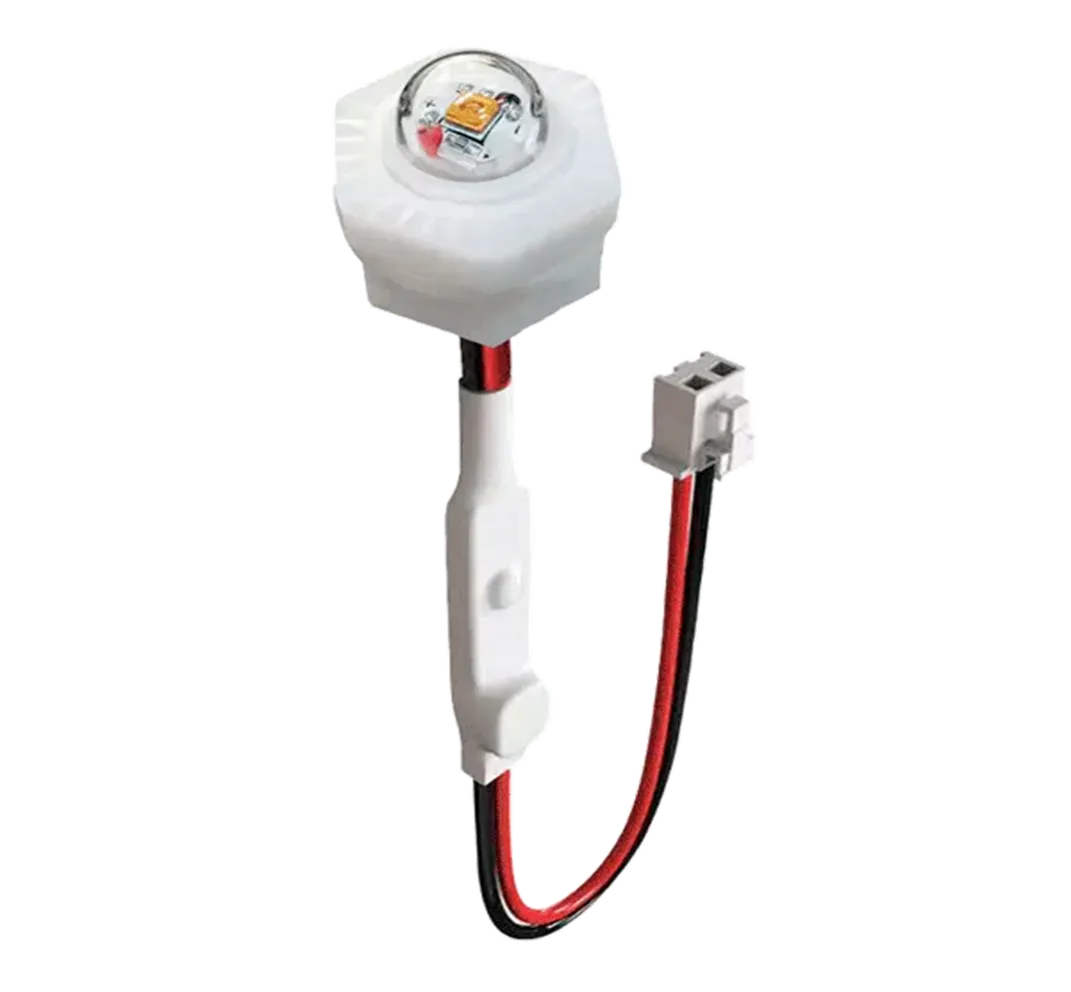
LYD's compact UV Sterilization of Water 804 is currently specified with 4–6 mW radiant output, 260–270nm wavelength options and suitability for tanks within 10 L. Those values describe the module, but the dose inside an actual appliance still depends on installation geometry and exposure time.
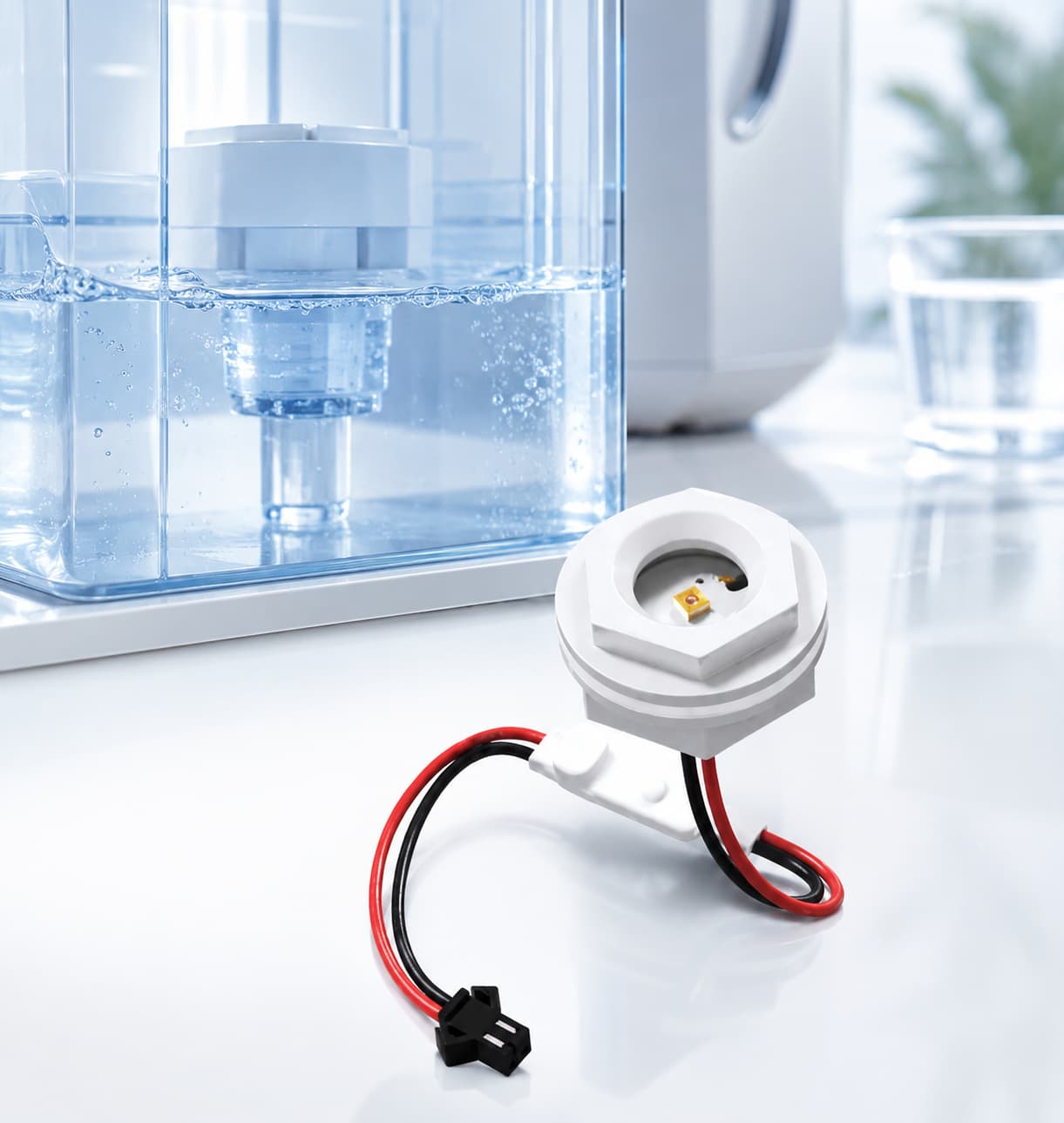
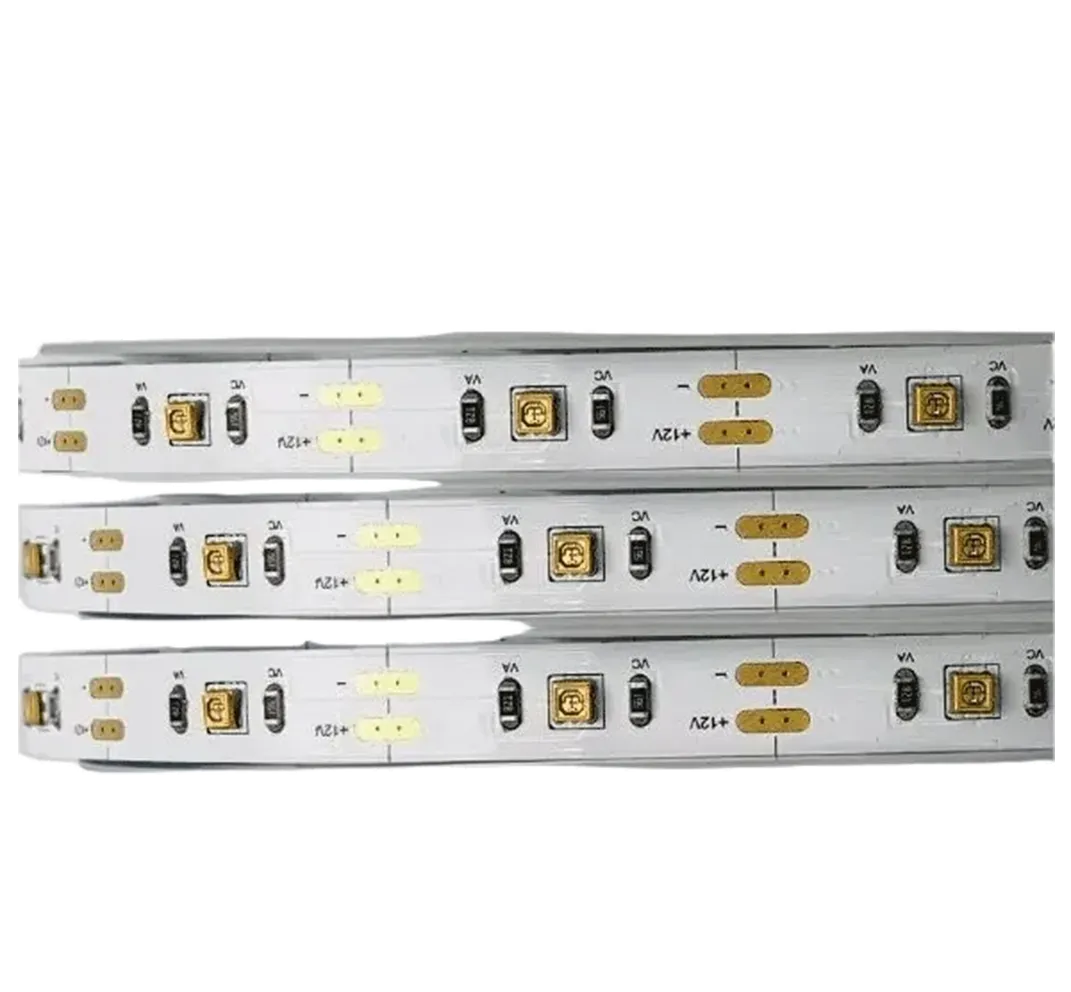
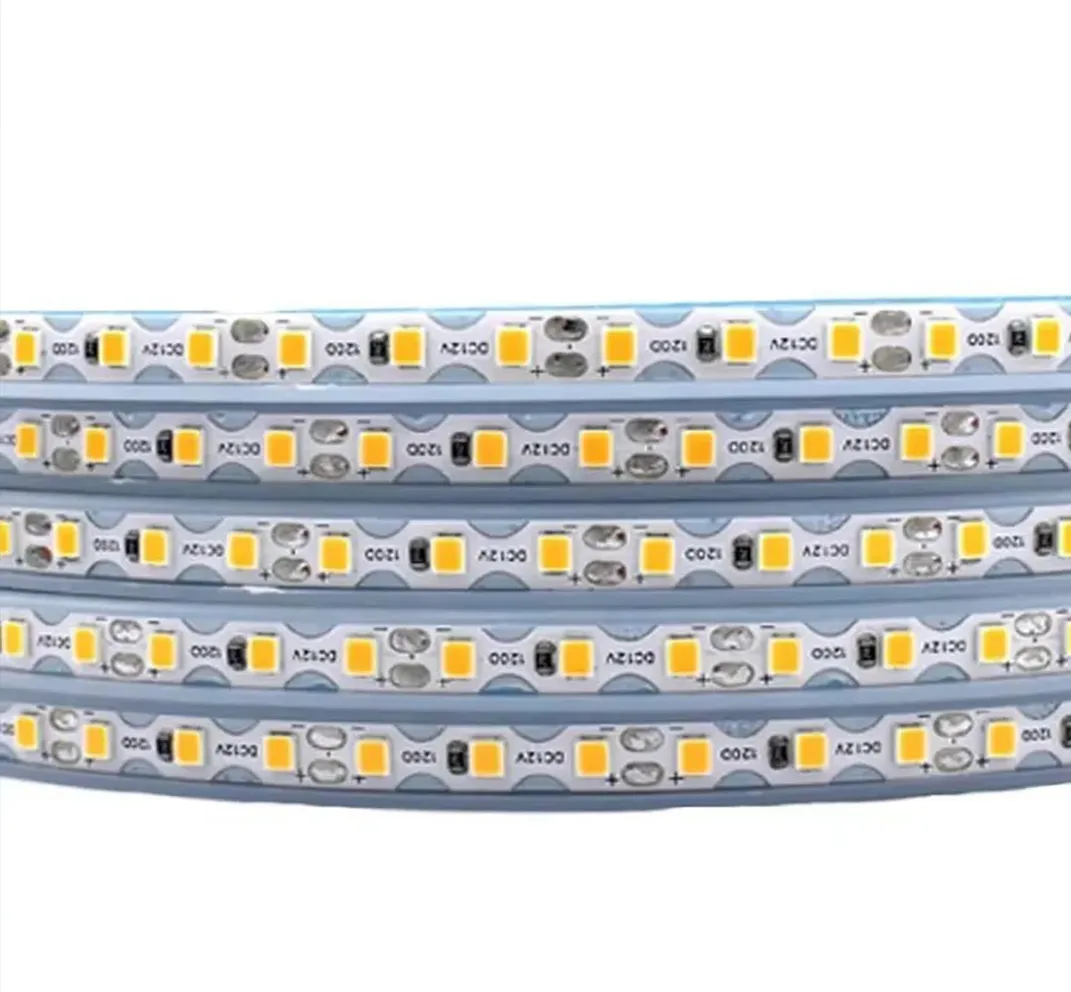
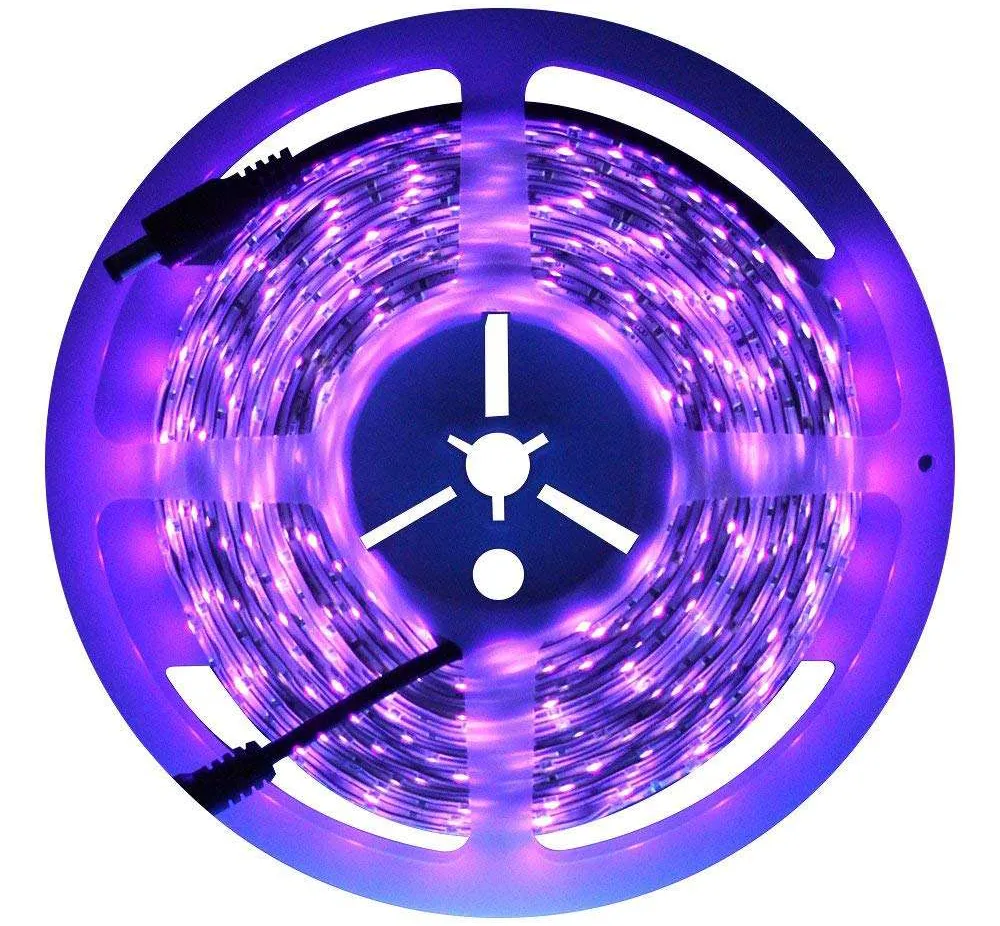
The formula becomes useful only when the irradiance value represents the water that actually needs treatment. Whether the UV source is a compact submerged module or a uv led strip for sterilization integrated around the treatment chamber, dose should be calculated from the irradiance actually reaching the target water rather than from the source specification alone. Imagine placing a UVC module against one wall of a 10 L reservoir. Water closest to the LED receives substantially more radiation than water on the opposite side. Measuring irradiance directly in front of the LED and multiplying it by treatment time can therefore overestimate the minimum dose delivered throughout the tank.
Several corrections matter.
Distance: UV irradiance generally decreases as the target moves farther from the source. Exact behavior inside a tank is affected by optics, reflections and LED beam shape, so the finished geometry should be measured rather than estimated from free-space theory alone.
UV transmittance: Water itself can absorb UVC. Color, dissolved substances and suspended particles can reduce penetration. Government guidance for drinking-water treatment notes that UV effectiveness can be impaired when water is colored or contains particulate material because UV must pass through the water to reach microorganisms.
Water depth: A shallow reservoir is generally easier to irradiate uniformly than a deep tank using the same source position.
Shadowing: Internal ribs, sensors, tubing, pumps and other appliance components can create areas receiving less UVC.
Mixing: A pump or circulation cycle can move water through higher- and lower-intensity zones. A completely motionless reservoir requires greater attention to spatial dose uniformity.
NIST research on UV dose measurement similarly accounts for effects such as surface reflection, sample depth, UV absorption and irradiation uniformity when determining delivered dose. This is why a reliable UVC dose calculation for an OEM water appliance should use measured or validated average/worst-case irradiance within the final chamber rather than LED radiant-power data alone.
Once the target dose and representative irradiance are known, rearrange the basic equation:
Exposure Time (s) = Target Dose (mJ/cm²) ÷ Irradiance (mW/cm²)
For example, if validation determines that the application requires 40 mJ/cm² and the relevant measured irradiance is 0.20 mW/cm²:
40 ÷ 0.20 = 200 seconds
The nominal exposure time would be about 3 minutes 20 seconds.
But this should not be interpreted as a universal sterilization setting. Required UV fluence varies by microorganism, wavelength, desired log reduction and water conditions. NIST's compilation of microorganism sensitivity data shows substantial differences in UV susceptibility among bacteria, viruses, protozoa and other organisms. Static systems provide one engineering advantage: unlike flowing-water reactors, they are not constrained to the few seconds during which water passes through a chamber. Longer treatment cycles can compensate for relatively low-power compact modules where appliance design permits.
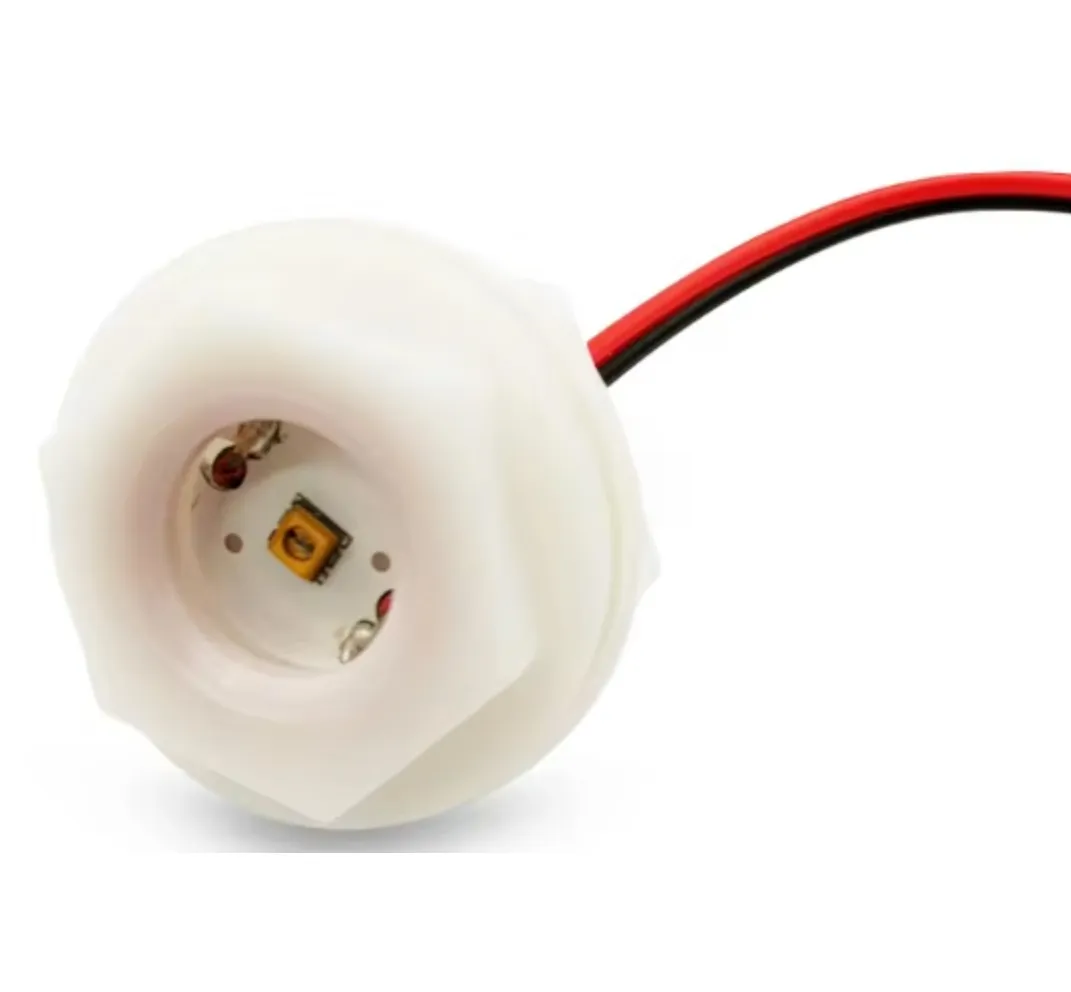
LYD's UV Sterilization of Water 801 is currently specified as a 1.5 W waterproof static-water module operating at 12–24 V with a 260–285nm wavelength range. LYD also offers the compact UV Sterilization of Water 902, measuring approximately φ15 × 13 mm and providing a listed radiant output of 3–10 mW with 270–280nm standard and other customizable wavelength options. The appropriate module therefore depends on more than tank capacity. Available mounting space, required cycle time, water depth and dose uniformity should also be considered.
| Design Factor | What to Calculate or Verify | Why It Matters |
|---|---|---|
| Target UV dose | mJ/cm² required for the intended microorganism/log reduction | Establishes treatment objective |
| Measured irradiance | mW/cm² at representative and worst-case locations | Determines actual delivered UV |
| Exposure time | Target dose ÷ irradiance | Defines treatment-cycle duration |
| Peak wavelength | Confirm actual UVC spectrum | Microbial response varies with wavelength |
| Water depth | Maximum distance UVC must penetrate | Influences dose uniformity |
| UV transmittance | Test representative production water | Absorption can reduce delivered dose |
| Tank geometry | LED position, reflective surfaces, internal obstacles | Affects shadows and distribution |
| Module waterproofing | Verify submerged-use design where required | Protects module reliability |
| Thermal conditions | Measure LED temperature during complete cycle | Optical output can vary with operating conditions |
| Microbial validation | Test finished appliance under worst-case conditions | Confirms real system performance |
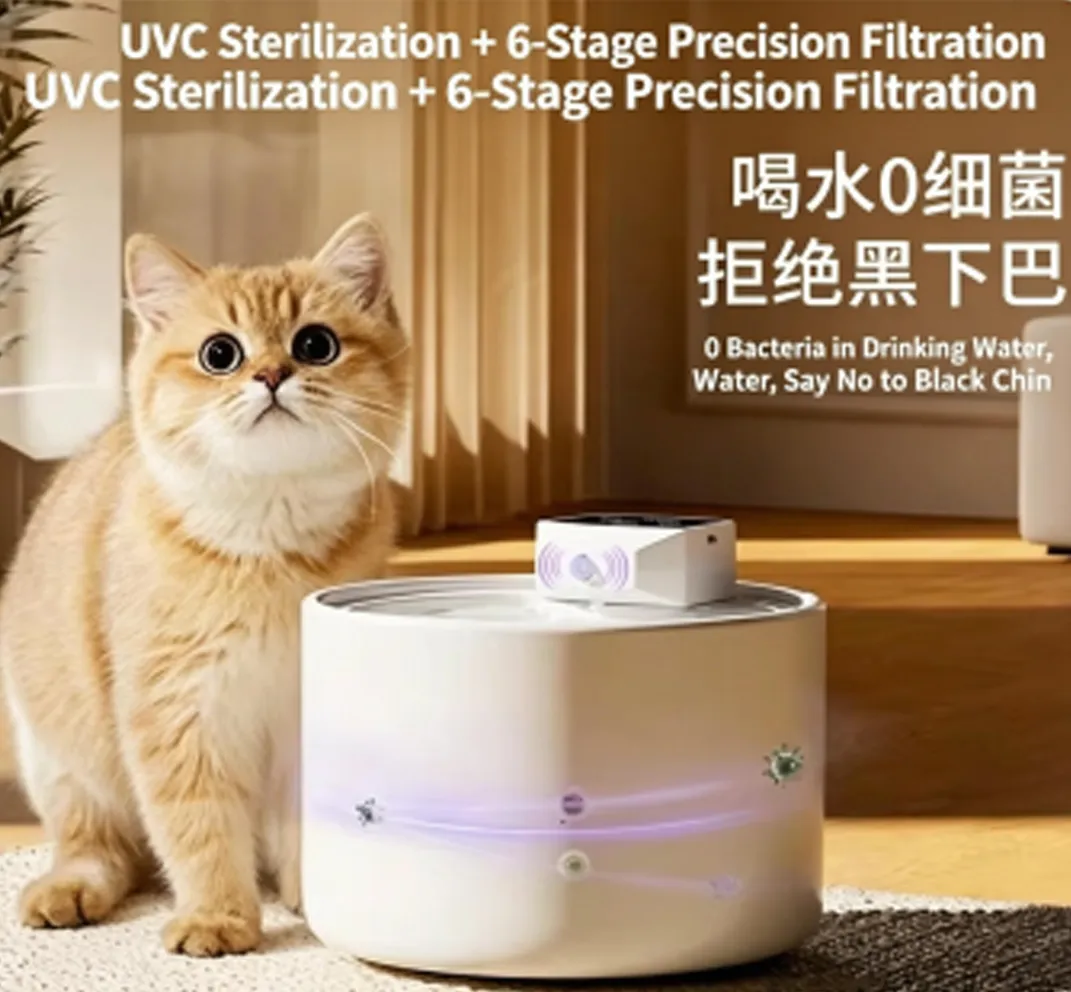
For OEM projects, LYD's broader UV Sterilization of Water range includes the L804, L801 and L902 module families for applications such as water dispensers, purifiers, pet fountains and humidifiers. A practical development process is to first define the required microbial reduction, then choose the wavelength and module, measure irradiance in the real tank, calculate a preliminary cycle time and finally validate the complete appliance microbiologically. Avoid specifying an OEM module only as “10 mW UVC for a 5 L tank.” That information does not establish the dose received by water at the farthest or most shielded point.
For a constant representative irradiance, dose is calculated as irradiance multiplied by exposure time:
Dose (mJ/cm²) = Irradiance (mW/cm²) × Time (s).
NIST describes UV dose using this irradiance-time relationship.
No. Radiant power is the total optical power emitted by the source. Dose describes UV energy delivered per unit area over time. Distance, beam distribution, water absorption and exposure time separate the two quantities.
There is no single value for every application. Required fluence depends on the target organism, desired log reduction, wavelength and water conditions. WHO describes delivered fluence as a key determinant of UV-disinfection effectiveness, while NIST data show that microorganisms differ in UV sensitivity.
No. Tank volume helps with preliminary module selection but does not define dose. A shallow 5 L tank and a deep 5 L tank can have very different UVC distribution even with the same module.
You can increase exposure time, reduce the optical distance where the design permits, improve reflective geometry or increase water movement to improve exposure uniformity. Any change should be verified in the finished appliance.
Provide tank volume and dimensions, water depth, material, module mounting position, target microorganism or validation requirement, desired treatment cycle, power supply, available space, water temperature and any waterproofing or connector requirements.
NIST — Design Considerations for a Surface Disinfection Device Using UV-C LEDs — explains the relationship between UV irradiance, exposure time and delivered dose.
NIST — Sensitivity of Bacteria, Protozoa, Viruses, and Other Microorganisms to Ultraviolet Radiation — compilation of microorganism UV-dose sensitivity data relevant to disinfection-system design.



 English
 русский
 日本語
日本語 한국어
한국어 français
 Deutsch
 Español
 português
 العربية
 italiano
 Nederland