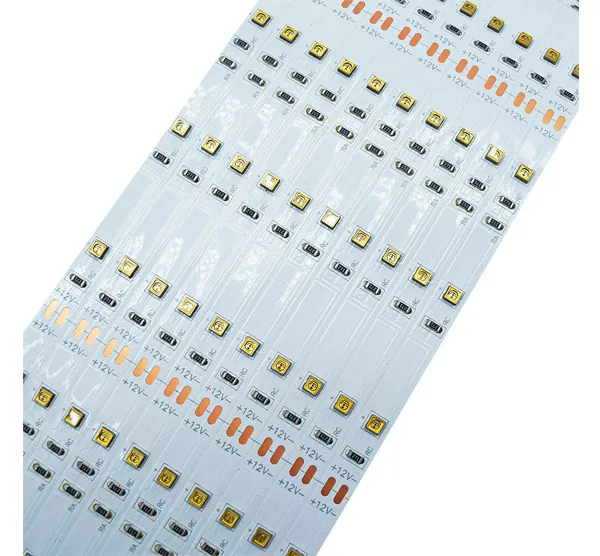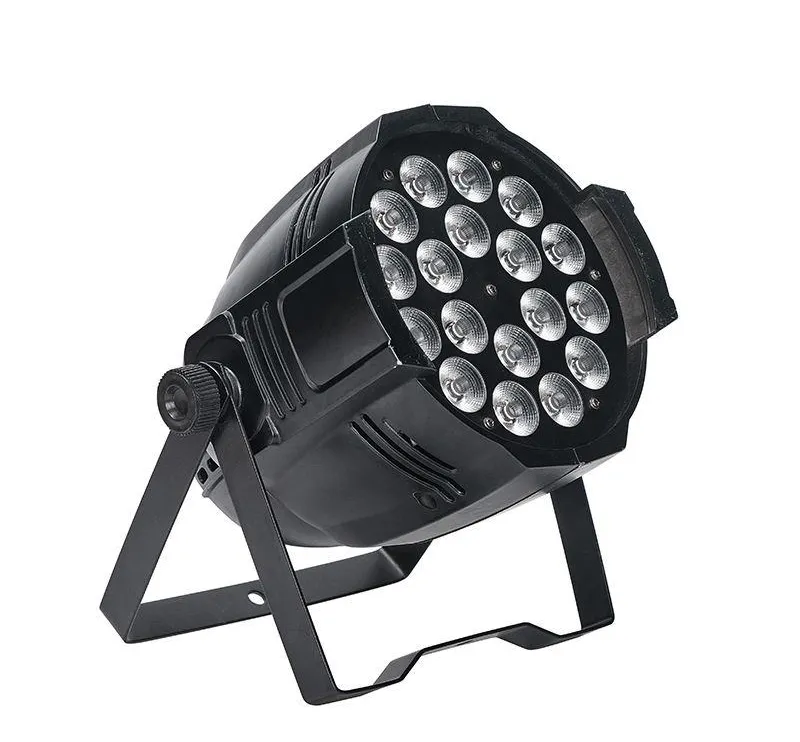
The penetration of UV LED technology into consumer products is not a sudden phenomenon. It is the result of a decade-long convergence of technical maturity, cost reduction, regulatory pressure, and shifting consumer expectations. Understanding this convergence — not just the products themselves — is key to grasping where the industry is heading.
For decades, ultraviolet disinfection meant mercury lamps. The technology was effective but carried inherent limitations: warm-up time (3-10 minutes), fragility, mercury content, and size constraints. These limitations kept UV technology largely in industrial and commercial settings.
The shift to UV LED began in earnest around 2015, driven by two parallel developments: the commercialization of high-quality AlGaN-based UVC LED chips, and the regulatory pressure of the Minamata Convention on Mercury, which mandates the phase-out of mercury-containing products globally.
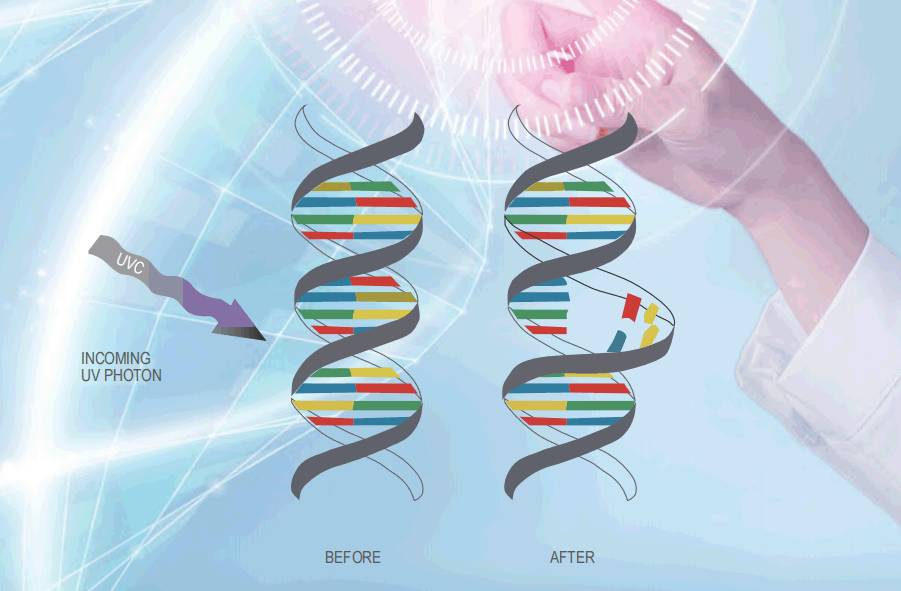
The germicidal efficacy of UVC is wavelength-dependent. Research has established that the peak absorption of microbial DNA occurs at approximately 265nm. Studies comparing multiple UVC wavelengths have demonstrated that UVC-LEDs emitting at 260-270nm achieve the highest bacterial inactivation efficacy, with significantly greater damage to bacterial DNA compared to conventional low-pressure mercury lamps. This wavelength specificity is what enables UVC LEDs to achieve rapid, targeted disinfection in compact form factors.
Early UVC LEDs were low-power, expensive, and short-lived. Today, individual UVC LEDs routinely achieve 100mW or more. Irradiation doses of 800 J/m² can be delivered in seconds, enabling efficient inactivation of bacteria and viruses. The cumulative effect of these improvements has been the gradual reduction of cost per milliwatt — the single most important factor enabling consumer product integration.
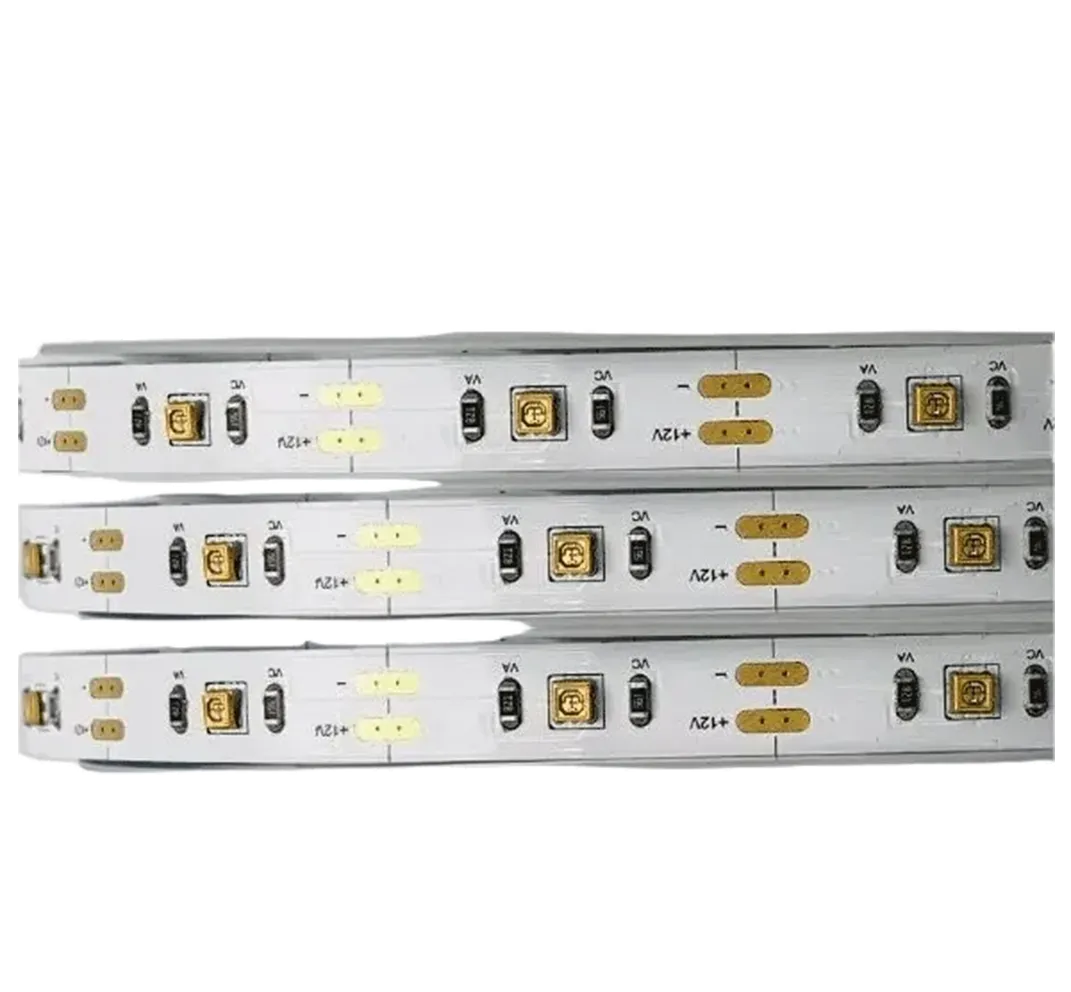
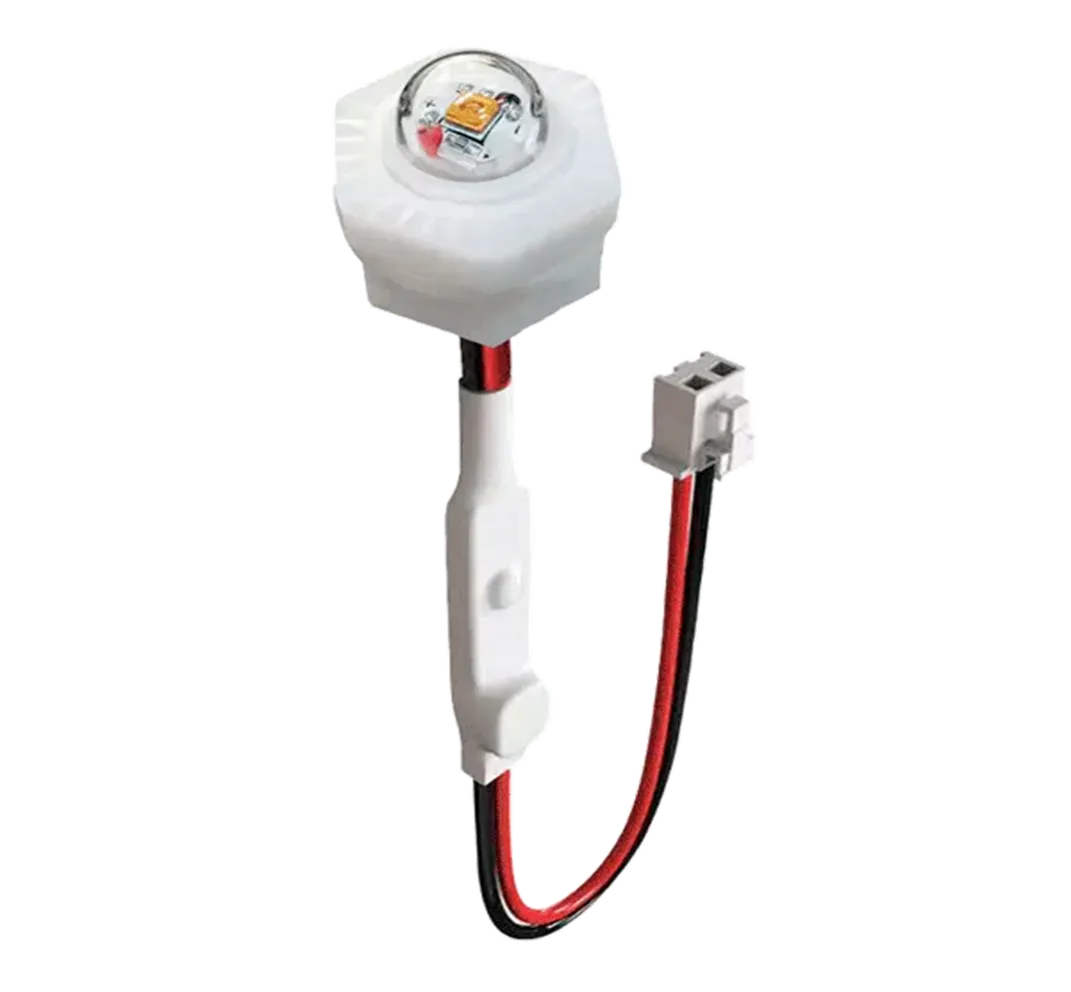
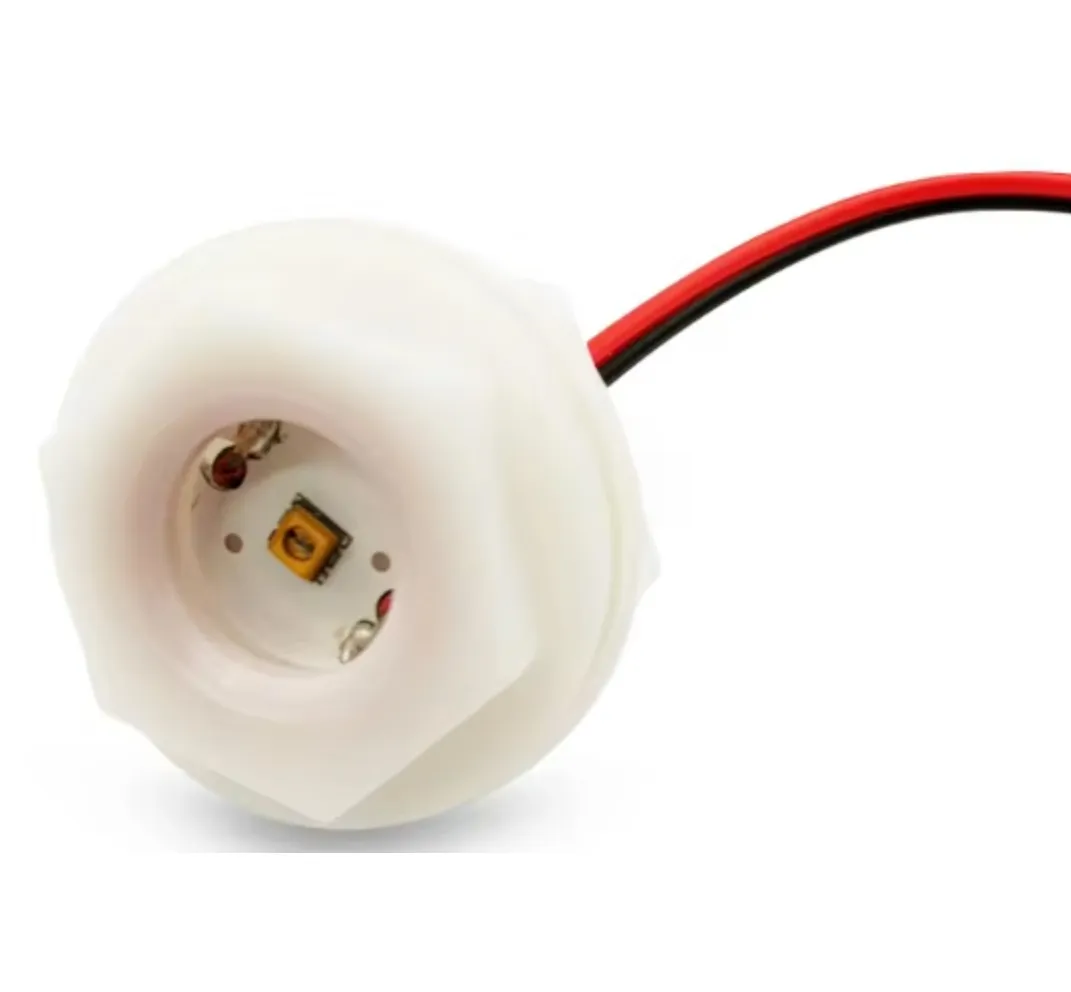
Consumer products are not one-size-fits-all. A handheld sterilizer requires different power, wavelength, and form factor than a pet fountain or a water dispenser. This is where the OEM/ODM model becomes essential. The ability to customize wavelength (255-285nm), power, size, and IP rating is what separates a component supplier from a solution partner.
The global UV LED market was valued at approximately $1.6 billion in 2025, with a volume of 173,800 units. It is projected to grow from $1.9 billion in 2026 to $12.4 billion by 2035, representing a compound annual growth rate (CAGR) of 23.5%. Other estimates place the 2025 value at $1.49 billion, projecting growth to $3.19 billion by 2032 at an 11.47% CAGR.
Within this broader market, the UV-C LED segment is growing even faster. Estimates suggest the UVC LED market will reach approximately $1.72 billion in 2026, driven primarily by disinfection and purification applications.
TrendForce projects the 2026 UV LED market to reach $215 million, with at least 10% annual growth, driven by stable growth in photocuring and sterilization applications. Consumer products account for a significant and growing share of this market, fueled by:
Rising consumer awareness of hygiene and health
Demand for chemical-free disinfection solutions
Increasing integration of UV LED into smart home ecosystems
Regulatory pressure phasing out mercury-based UV lamps
The consumer UV LED market can be segmented into several key applications:
1. Handheld Sterilizers — portable, battery-operated devices for personal and household use
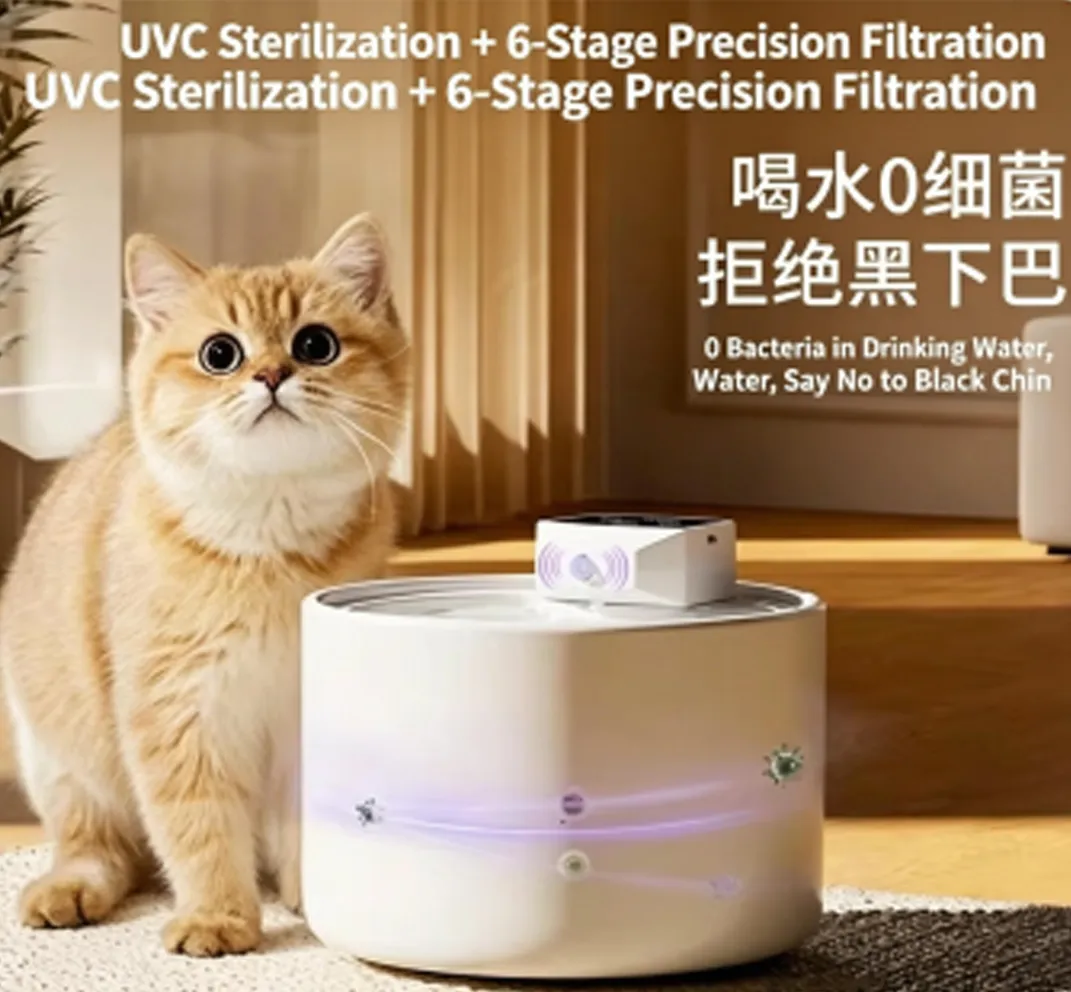
2. Pet Products — water fountains, grooming tools, and litter boxes with integrated UVC sterilization
3. Water Dispensers & Purifiers — point-of-use and under-sink systems
4. Home Appliances — humidifiers, ice makers, air purifiers, and smart toilets
5. Air Purification — portable and HVAC-integrated systems
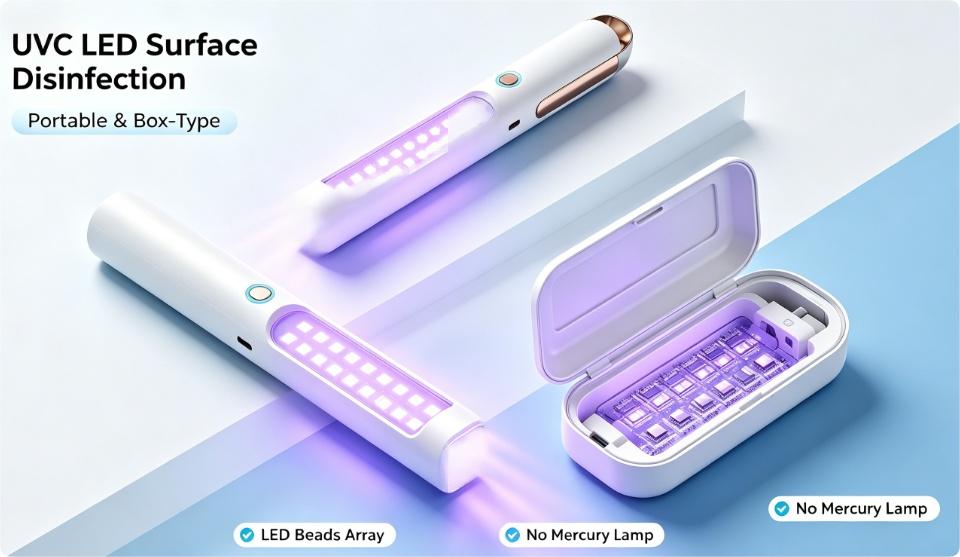
The handheld sterilizer is perhaps the most accessible consumer UV LED product. A typical device uses 16 high-power UVC LEDs (270-285nm) with UVA LEDs (395nm) for visual indication, powered by a 2600mAh battery with USB-C charging and up to 120 minutes of runtime. Efficacy testing shows 99.99% reduction against E. coli, Staphylococcus aureus, and Salmonella.
The engineering challenge lies not in the LEDs themselves, but in the integration — battery management, thermal dissipation, safety interlocks, and user interface. These are the areas where OEM experience matters.
The global smart pet fountain UV market was valued at approximately $0.4 billion in 2025 and is projected to reach $0.9 billion by 2034, growing at a 9.2% CAGR. The value proposition is clear: biofilm forms in water tanks within 24-48 hours, leading to urinary tract infections and digestive issues in pets. UVC LED modules installed in the water path eliminate 99.9% of bacteria and biofilm.
Products now feature 260-280nm UVC sterilization, 2.0-2.3L capacity, wireless battery operation, and app monitoring. The integration of UVC LED into pet products represents one of the fastest-growing segments, driven by pet humanization trends and rising consumer willingness to pay for pet health.
UVC LED modules in water dispensers represent one of the most mature consumer applications. Flow-through and static designs, with flow rates from 1.5L/min to 8L/min, are now standard. The key value proposition is the elimination of biofilm and the reduction of bacterial contamination at the point of use.
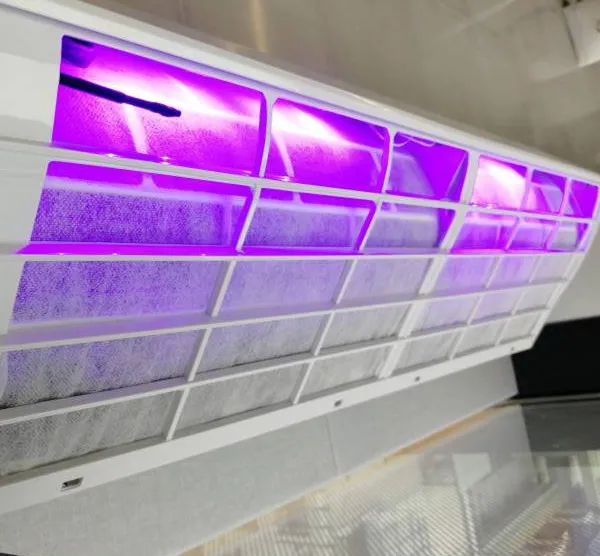
Beyond these established categories, UV LED is finding its way into humidifiers, ice makers, air purifiers, and smart toilets. Each application presents unique integration challenges — waterproofing, thermal management, optical design — but the underlying technology remains the same.
One of the most significant challenges facing the UV LED industry is the gap between laboratory efficacy and real-world performance. Laboratory testing has demonstrated that UVC LEDs can achieve high microbial inactivation rates under controlled conditions. However, the translation to consumer products is not always straightforward. Recent testing has revealed significant variability in product performance — some products achieving 99.95% reduction while others fall short of their claimed efficacy. This inconsistency threatens consumer trust and undermines the industry's credibility.
Unlike mercury lamps, which have well-established dose-response relationships, UV LED systems lack industry-wide standardization for dose measurement and validation. This creates confusion for manufacturers and consumers alike.
UVC LEDs generate significant heat, and thermal management is critical for maintaining wavelength stability and LED lifetime. In compact consumer products, heat dissipation is a major engineering challenge.
UVC light is harmful to skin and eyes. Consumer products must incorporate safety features — motion sensors, tilt switches, automatic shut-off — to prevent accidental exposure. Navigating the certification landscape (CE, RoHS, FCC) adds cost and complexity to product development.
While the cost of UVC LEDs has declined significantly, it remains higher than traditional mercury lamps. Consumer products are price-sensitive, and manufacturers must balance performance with affordability.
The future of UV LED in consumer products is integration, not standalone devices. Rather than separate sterilizers, UV LED will be embedded into existing appliances — water dispensers, pet fountains, air purifiers, and smart home systems.
As manufacturing scales, cost per milliwatt will continue to decline. This will enable UV LED to penetrate price-sensitive consumer segments that are currently underserved.
While 260-280nm remains the primary focus for germicidal applications, emerging research on wavelength-specific inactivation mechanisms suggests that future products may use multiple wavelengths for optimized disinfection across different pathogen types.
UV LED modules will increasingly be integrated with sensors, IoT connectivity, and app monitoring. This will enable usage tracking, performance monitoring, and predictive maintenance — adding value beyond basic disinfection.
The phase-out of mercury lamps under the Minamata Convention will continue to drive UV LED adoption, particularly in applications where mercury lamps have traditionally dominated.
For consumer product brands, the decision to integrate UV LED is not simply about adding a feature. It is about finding a partner who can deliver a custom solution that fits the product's form factor, power requirements, and cost targets.
LYD Electronics has been manufacturing UVC LED modules for over 15 years. Our capabilities span wavelength customization (260-285nm), power optimization, form factor design, and IP rating selection (IP20, IP65, IP67, IP68). CE/RoHS/FCC certified. 80% of components manufactured in-house, from SMT assembly to final testing.
Many of our successful cases and product solutions are not fully displayed on our website. The UV LED solutions we've developed — for consumer products, home appliances, pet products, and more — go far beyond what you see here.
Our core strength is customization. Every client has unique requirements, and we engineer solutions to match them. If you have a specific product or application in mind, we'd be happy to discuss how we can help.
liang@lydlighting.com | www.lydlighting.com
Next Issue: We'll explore the intersection of UV LED and smart home ecosystems — how integration with IoT is creating new value propositions.
Subscribe to UV LED Application Series for weekly technical insights.


 English
 русский
 日本語
日本語 한국어
한국어 français
 Deutsch
 Español
 português
 العربية
 italiano
 Nederland