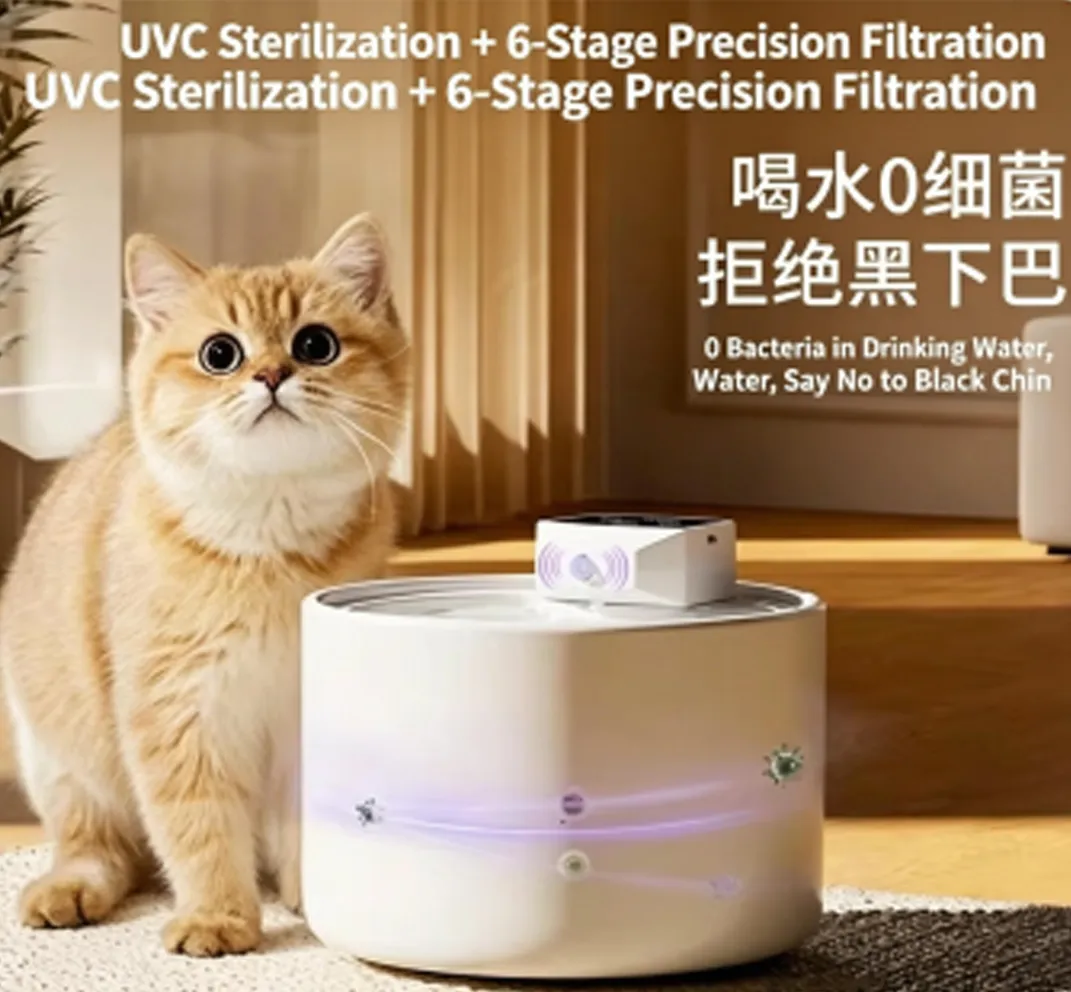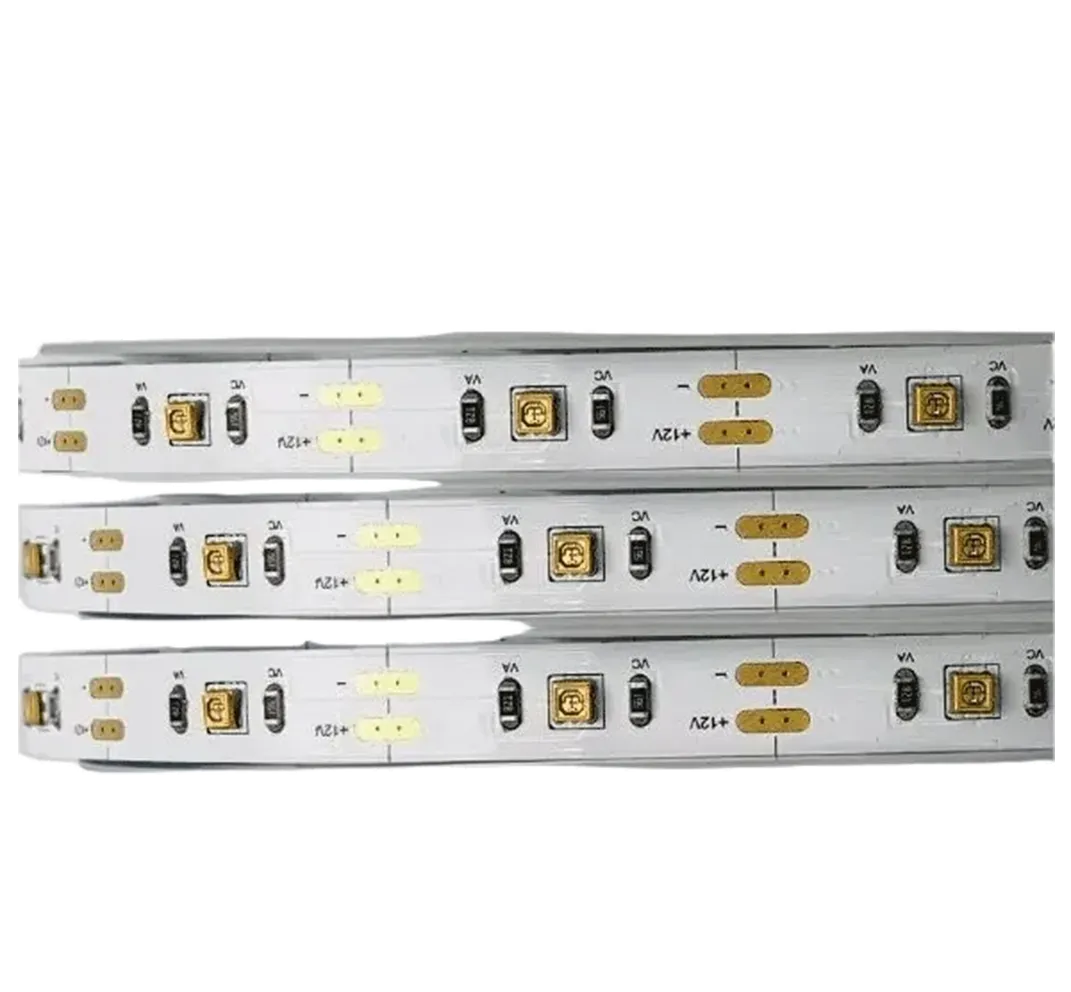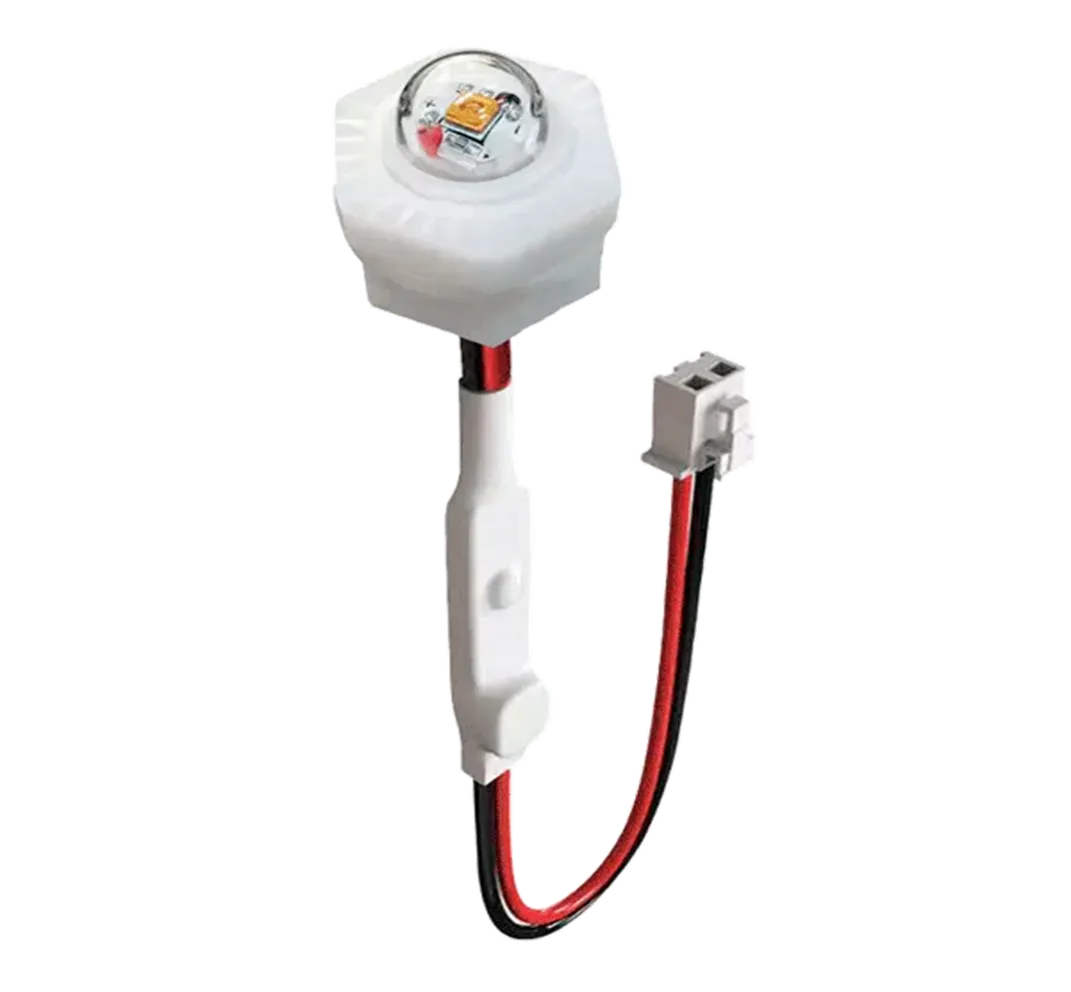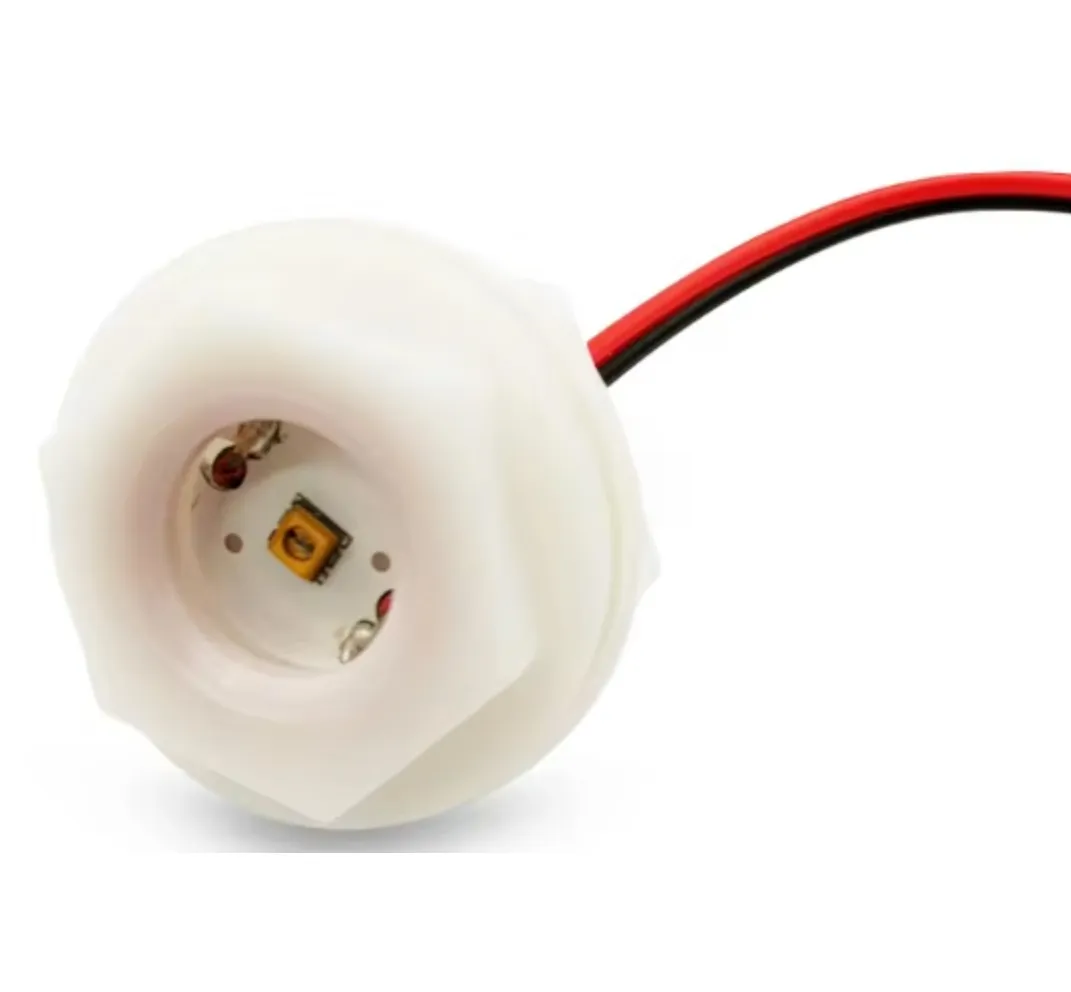
Among all UV LED application segments, water treatment represents the largest and most stable growth market. In 2025, the global UV water treatment systems market was valued at approximately USD 1.47–1.51 billion, with projections reaching USD 2.60 billion by 2032 at a CAGR of approximately 8.3%. Within the broader UVC LED market, water disinfection captured approximately 44.20% of market share in 2025, cementing its role as the anchor segment.
More notably, UV LED technology is rapidly transitioning from consumer and small-scale applications to large-scale industrial and commercial water treatment scenarios. TrendForce data indicates that the overall UV LED market is expected to reach USD 215 million in 2026, with year-over-year growth of at least 10%. Industrial and commercial dynamic water sterilization projects are emerging as key growth engines, with leading manufacturers like ams OSRAM and Nichia having already deployed their ≥100mW UV-C LED products in this segment.
Industry Insight: Water treatment serves as the ideal proving ground for UV LED's transition from "technology validation" to "commercial scale-up"—with clear replacement demand (mercury lamp phase-out), well-defined ROI models (reduced operational costs), and increasingly stringent regulatory drivers.
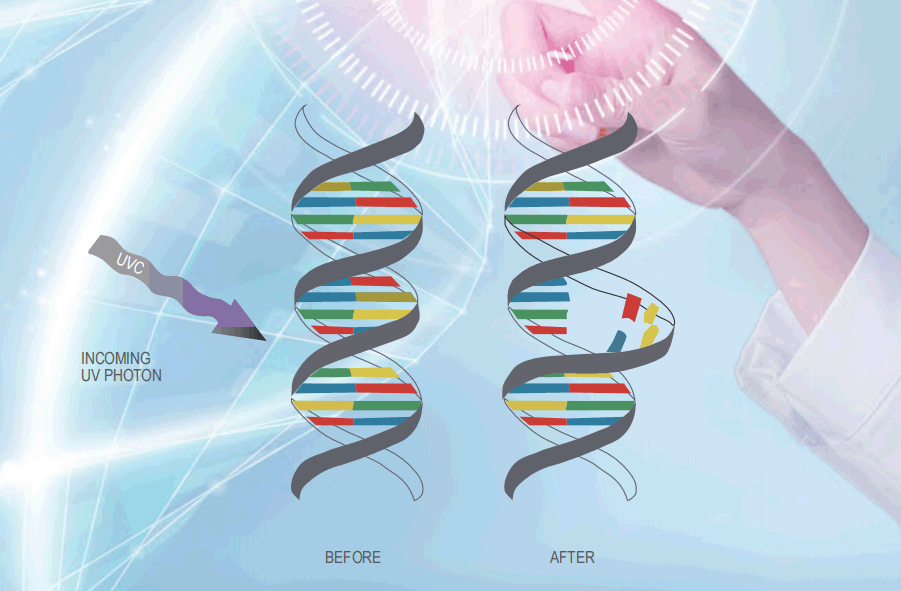
Traditional UV water treatment systems rely on low-pressure mercury lamps (254nm single wavelength, high efficiency, low cost) and medium-pressure mercury lamps (200–400nm multi-wavelength, suitable for complex water quality) as core technologies. These systems achieve chemical-free, broad-spectrum disinfection by disrupting the DNA/RNA structures of microorganisms—including bacteria, viruses, Cryptosporidium, and algae—rendering them incapable of reproduction.
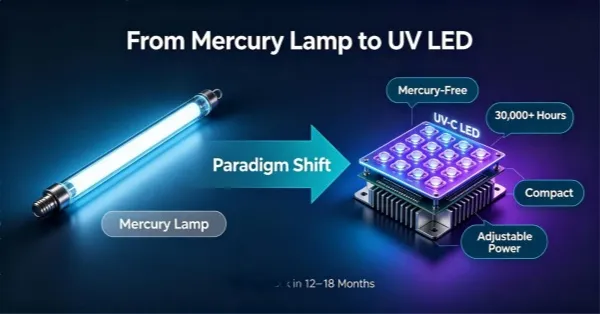
UV LEDs are fundamentally reshaping this landscape. Compared to mercury lamps, UV LEDs offer four core advantages: mercury-free (compliance with the Minamata Convention on Mercury and global mercury restrictions), long lifespan (30,000+ hours), compact footprint (ideal for space-constrained installations), and adjustable power output (on-demand operation).
However, UV LED systems currently carry an initial price premium of 2.5–3.5× compared to traditional mercury lamps. Total Cost of Ownership (TCO) modeling consistently shows payback within 12–18 months once energy and maintenance savings are accounted for. With average selling prices down 30% since 2024, this gap is narrowing rapidly.
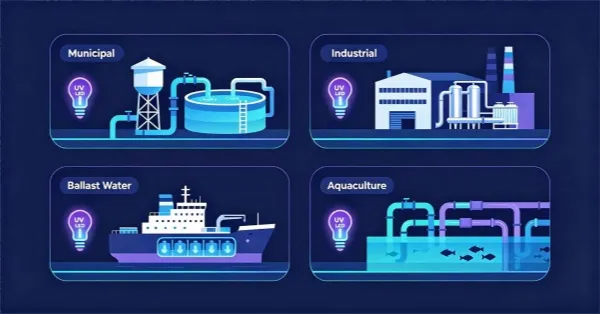
Municipal drinking water and wastewater disinfection represents the largest UV water treatment application, accounting for approximately 41% of the total market. UV technology is displacing traditional chlorine disinfection, reducing disinfection byproducts (DBPs) and meeting increasingly stringent water quality standards.
Latest Development: In 2025, Norwegian utility Glitrevannverket launched the country's first municipal-level UVC LED pilot project, partnering with Danish engineering consultancy Ramboll and UVC LED specialist AquiSense to test multiple units for municipal and industrial water disinfection. This follows North America's first municipal-scale UVC LED installation at the Las Vegas Valley Water District. The PearlAqua Kilo™ system handles flow rates up to 6 MGD (approximately 22,712 m³/day). The product has been awarded NSF/ANSI/CAN 61-2024 certification and successfully completed the rigorous validation process required by the U.S. EPA UV Disinfection Guidance Manual (UVDGM).
This trend signals that UV LED technology has moved beyond the laboratory and point-of-use devices into municipal-scale deployment.
Industrial sectors demand extremely high water quality for ultra-pure water, pharmaceutical manufacturing, and food and beverage production. UV LEDs are rapidly replacing traditional mercury lamps in these applications.
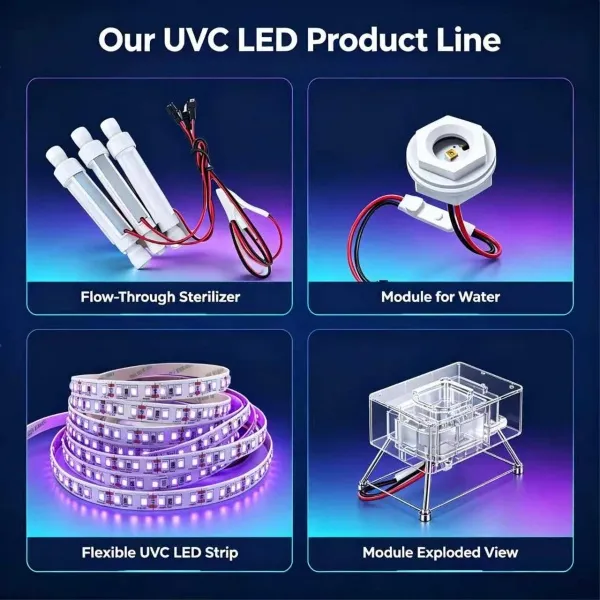
Stanley Electric's ULR0031A flow-through UV-C LED sterilization system, equipped with 265nm high-power UV-C LEDs, achieves a maximum flow rate of 18.0 m³/h and effectively inactivates bacteria and viruses including chlorine-resistant microorganisms. It is suitable for pure water systems, industrial process water, cooling water, hydroponics, and more.
In China, Zhongke Lu'an has successfully developed a deep UV LED high-flow water sterilizer, achieving a breakthrough 10-ton-per-hour treatment capacity. The system has been showcased at the Middle East (Dubai) Big 5 exhibition and is applicable to drinking water treatment and industrial recirculating water treatment.
Invasive aquatic species transported via ship ballast water pose a serious threat to marine ecosystems. UV treatment is currently the most dominant and cost-effective ballast water treatment technology.
France's BIO-UV Group has successfully supplied BIO-SEA series ballast water treatment systems to five cruise ships, utilizing UV light without chemicals or active substances and fully complying with IMO D-2 discharge standards. The B-Series systems handle flow rates up to 250 m³/h, with custom units capable of processing up to 1,000 m³/h.
Researchers are exploring multi-band UV LED light sources combined with side-emitting optical fibers to address issues of high energy consumption, short lifespan, and mercury leakage risks in conventional inactivation systems.
Recirculating Aquaculture Systems (RAS) require continuous water disinfection. UV-C LEDs exhibit bactericidal effects against multiple fish pathogens and are emerging as next-generation sterilization devices to replace conventional mercury lamp-based UV sterilizers, owing to their long lifespan.
Research shows that UV-LEDs at 265nm, 280nm, and 300nm wavelengths demonstrate significant inactivation efficacy against Vibrio parahaemolyticus and Pseudomonas aeruginosa, with 265nm performing best. UV-LEDs can also serve as promoters of photochemical and photocatalytic processes to enhance disinfection in aquaculture applications.
2025 marks a pivotal year for UV LED water treatment technology—with milestone breakthroughs in high-flow treatment capacity.
Nichia has successfully developed a new deep UV LED light source technology, combining high-heat-dissipation packaging technology from semiconductor laser diodes (LDs) with high-power deep UV LED chips. This innovation achieves double the output density and approximately 20% improvement in heat dissipation performance compared to conventional models.
MIURA's mercury-free UV-LED water sterilization equipment, incorporating this new light source, has seen treated water capacity steadily increase: from 8 m³/h in 2024 to 10 m³/h in 2025, and now reaching approximately 25 m³/h—about 2.5 times greater—while maintaining the same light source size. The miniaturization of the light source also enables more compact equipment design, suitable for installation in locations previously difficult to deploy. MIURA began accepting orders for the 25 m³/h model on April 1, 2026.
ams OSRAM announced in August 2025 that its new UVC LED achieves over 10% wall-plug efficiency (WPE) at 200mW power and 265nm wavelength, with a lifespan exceeding 20,000 hours. This represents nearly a doubling of efficiency compared to the previous ~5.3% WPE. Germany's national metrology institute PTB has independently verified a WPE of 10.2%. The product is scheduled for official market launch in Q4 2026.
TrendForce's "2H25 Deep UV LED Market Trend and Product Analysis" report explicitly states that ams OSRAM and Nichia's ≥100mW UV-C LED products have already been deployed in industrial and commercial flowing water sterilization projects, advancing toward mercury lamp replacement.
Chinese Player Update: Shenzhen Hechuang Hitech (Innest) has launched a full-series UVC-LED water sterilization product line covering flow rates from 1L/min to 100T/h, addressing residential, commercial, and industrial applications. The company plans to introduce even larger-flow models at 200T/h and 1,000T/h.
The Three Core Technical Bottlenecks of High-Flow Scale-up:
1. Optical Power Density: The optical output of a single UV-C LED chip remains limited (currently 100–200mW mainstream). Achieving industrial-scale flow rates requires large LED arrays, introducing challenges in optical uniformity and power consumption;
2. Thermal Management: UV-C LEDs convert only about 10% of electrical energy into light—the remaining 90% becomes heat. Under high-density arrays, every 10°C increase in junction temperature roughly halves the lifespan (as established in Issue #7). Nichia's 20% heat dissipation improvement via LD-derived packaging technology directly addresses this core pain point;
3. Optical Design: Water has a high UV-C absorption coefficient. Reactors must achieve sufficient optical path length and uniform radiation field distribution within a limited volume—CFD simulation is the key tool for solving this challenge.
[LYD Touchpoint ① Technical Capability Endorsement] To address these three technical bottlenecks, suppliers with full-chain integration capabilities—such as LYD Electronics—can help system integrators effectively avoid sterilization failures caused by chip overheating or non-uniform optical fields through precise optical simulation and co-design of thermal structures at the module design stage. This is the critical engineering capability that moves UV LED from "functional" to "reliable."
Key Implication: High-flow capability is the critical threshold for UV LED's transition from "consumer novelty" to "industrial workhorse." The three-step leap from 8→10→25 m³/h in 2024–2025 signals that this inflection point has arrived.
The performance of UV LED water treatment systems depends not only on the LED chips themselves but critically on reactor engineering. Computational Fluid Dynamics (CFD) is emerging as an essential tool for reactor design optimization.
In ballast water treatment scenarios, CFD simulation faces unique challenges—reactors must be arranged within the confined spaces of ship hulls while coping with dramatic fluctuations in seawater temperature, salinity, and turbidity. Research demonstrates that CFD-optimized LED ring spacing (<40mm for optimal efficiency in low-transmittance water) and wall reflectivity (0.6–0.94) can achieve up to 30% improvement in inactivation under high-flow stratified flow conditions. In recirculating aquaculture systems, CFD must also account for the dynamic impact of fish metabolites on UV transmittance, requiring adaptive LED layout adjustments based on water quality variations.
[LYD Touchpoint ② Customization Capability] CFD-based LED layout optimization is a standard deliverable in LYD Lighting's industrial-grade UV LED module customization services. By developing dedicated optical field models for different water qualities (transmittance, suspended solids concentration) and flow channel geometries, LYD Lighting achieves industry-leading UV dose uniformity in reactor designs.
UV LED applications extend beyond microbial inactivation into Advanced Oxidation Processes (AOP). UV-LEDs combined with oxidants such as hydrogen peroxide (H₂O₂) and persulfate effectively degrade pathogens and emerging micropollutants.
In textile wastewater treatment, UV-LED photoreactors demonstrate excellent performance in activating ZnO for Rhodamine B removal. In PVC production mother liquor treatment, the UV-LED/persulfate/heat combination achieved 82.9% COD removal.
Fraunhofer Institute researchers are developing foam ceramics with functional coatings that, when irradiated with UV LEDs, generate highly reactive radicals capable of decomposing stubborn pollutants in water.
Commercial Value: In semiconductor industry ultra-pure water treatment*, UV-LED Advanced Oxidation Processes (AOP) are becoming standard practice. UV-LEDs combined with hydrogen peroxide (H₂O₂) effectively degrade trace organic compounds (TOC) in ultra-pure water—a critical step for chip manufacturing water quality compliance. Compared to traditional mercury lamp AOP systems, UV-LED solutions reduce footprint by over 50% and operating power consumption by 30%, with no periodic mercury lamp replacement required, substantially lowering maintenance costs.
AOP applications elevate UV LEDs from "disinfection tools" to "comprehensive water quality treatment platforms," opening higher-value market opportunities.
China · Changzhi, Shanxi: In August 2026, Shanxi Province launched a municipal wastewater UV LED green intelligent disinfection project, constructing an ultra-high-density UV LED integrated wastewater disinfection unit with treatment capacity of 3,000 m³/d on a footprint of only approximately 30 m². This is China's first publicly tendered municipal-level UV LED wastewater disinfection project, marking the official entry of UV LED technology into the engineering phase of China's municipal wastewater treatment sector.
Netherlands · Alphen aan den Rijn: On May 27, 2026, the Municipality of Alphen aan den Rijn officially inaugurated the Aarplein water buffer, one of the flagship demonstration sites of the **LIFE GreenLED project. Apria Systems' UV-C LED technology provides the final disinfection step before reuse. This EU LIFE-funded UV-C LED water treatment demonstration project carries significant policy demonstration value.
Norway · Glitrevannverket: In 2025, Norwegian utility Glitrevannverket launched the country's first municipal-level UVC LED pilot project in partnership with Ramboll and AquiSense.
USA · Las Vegas: North America's first municipal-scale UVC LED installation at the Las Vegas Valley Water District has been successfully deployed, with the PearlAqua Kilo™ system achieving NSF/ANSI/CAN 61-2024 certification and EPA UVDGM validation.
On September 28, 2025, China published the T/CSA 084-2025 group standard for "Ultraviolet Light-Emitting Diode (UV-LED) Water Disinfection Equipment," specifying technical requirements, test methods, inspection rules, and marking, packaging, transport, and storage requirements.
At the international level, EU Regulation (EU) 2020/741 has established critical standards for reclaimed water reuse, particularly in agricultural irrigation. Europe is developing the prEN 18380 standard to regulate the performance, safety, and testing requirements for UV LED water treatment equipment in buildings. US EPA disinfection validation and NSF 61 certification are also driving industry standardization.
Regulatory Drivers Are Irreversible: The Minamata Convention on Mercury entered into force in 2017, and global mercury mining is expected to be fully banned by 2032. Currently, 98% of the UV disinfection market still uses mercury lamp systems. This means that within the next 5–7 years, virtually the entire UV water treatment market will face technology replacement pressure. UV LED is the only mature mercury-free alternative available today.
Industry Significance: Standardization is the prerequisite for transitioning from "early adopters" to "mass commercialization." The release of T/CSA 084-2025 marks a new phase of regulated development for China's UV LED water treatment industry.
[LYD Touchpoint ③ Compliance & Selection Advisory] Given the increasingly stringent international and domestic standards, engaging early with module suppliers that offer full-process compliance delivery capabilities—such as LYD Electronics—for selection requirements can significantly shorten product certification cycles (CE/UL/RoHS/REACH) and avoid project delays and rework costs caused by non-compliance.
Metric | Data |
Global UV Water Treatment Systems Market (2025) | ~USD 1.47–1.51B |
Global UV Water Treatment Systems Market (2032E) | ~USD 2.60B (CAGR 8.3%) |
UVC LED Water Treatment Share (2025) | 44.2% |
Municipal Water/Wastewater Share | ~41% |
UV LED Overall Market (2026E) | USD 215M (YoY ≥10%) |
UV LED vs Mercury Lamp Price Premium | 2.5–3.5× (narrowing rapidly) |
TCO Payback Period | 12–18 months |
High-Flow Capacity Breakthrough (2024→2025) | 8→25 m³/h |
For UV LED Chip/Package Manufacturers:
High-flow capability is the core requirement for industrial water treatment—continued investment in single-chip power output (ams OSRAM's 200mW target is strategically significant)
Thermal management is a key differentiator—Nichia's LD-derived heat dissipation packaging approach is worth close attention
For System Integrators:
CFD simulation capability will become a core competitive advantage, significantly improving reactor design efficiency and customer trust. For companies lacking in-house simulation teams, co-development with solution providers that offer integrated opto-electro-thermal-mechanical design capabilities (such as LYD Electronics) is an efficient path to reduce R&D risk.
Focus on high-value applications such as AOP to avoid pure price competition
For End-Users/OEMs:
TCO thinking is more important than initial purchase price—12–18 month payback makes UV LED economically competitive
Monitor standardization developments such as T/CSA 084-2025 and select compliant products to mitigate long-term risks
UV LED applications in industrial water treatment are experiencing a critical transition from "technology validation" to "scale deployment." The 2025–2026 period marks a new phase for the industry, driven by three simultaneous developments: high-flow technology breakthroughs (8→25 m³/h), the launch of the first municipal-scale pilot projects, and the publication of China's group standard.
Water treatment represents UV LED's largest addressable market and the most strategically valuable battleground in the UV LED vs. mercury lamp replacement race. For industry participants across the value chain, now is the critical window to establish a position in the industrial water treatment market.
Next Issue Preview: Issue #10 will focus on UV LED applications in horticulture and agricultural technology, exploring the latest research and commercial opportunities in UVB/UVA for plant secondary metabolite regulation, pest and disease control, and post-harvest preservation.


 English
 русский
 日本語
日本語 한국어
한국어 français
 Deutsch
 Español
 português
 العربية
 italiano
 Nederland